
The Science of Harpsichord-Enhanced Poker Performance
Understanding Audio-Cognitive Enhancement in Poker
Baroque harpsichord rhythms operating at 85-95 BPM create an optimal cognitive framework for enhanced poker decision-making. These precise musical patterns establish a natural synchronization between player awareness and strategic gameplay, fundamentally transforming the poker experience through audio-cognitive optimization.
Technical Specifications for Peak Performance
The implementation of harpsichord-based enhancement requires specific environmental parameters:
- Acoustic Engineering: 35-40 dB noise floor
- Reverb Time: 1.2-1.8 seconds
- Tempo Range: 85-95 beats per minute
- Musical Style: Baroque harpsichord compositions
Strategic Benefits of Harpsichord Integration
Pattern recognition and multi-dimensional awareness significantly improve when players experience carefully calibrated harpsichord rhythms during gameplay. This acoustic environment creates optimal conditions for:
- Enhanced betting pattern synchronization
- Improved cognitive processing speed
- Heightened situational awareness
- Advanced pattern recognition capabilities
#
Frequently Asked Questions
Q: How does harpsichord music affect poker performance?
A: The specific rhythm and tempo of harpsichord music creates an optimal cognitive processing environment that enhances decision-making capabilities.
Q: What is the ideal volume level for harpsichord integration?
A: The optimal noise floor should be maintained at 35-40 dB for maximum effectiveness.
Q: Can any baroque music provide similar benefits?
A: Harpsichord compositions specifically tuned to 85-95 BPM provide the most effective cognitive enhancement.
Q: How long does it take to see results?
A: Players typically experience enhanced pattern recognition and awareness within initial sessions.
Q: Is this technique legal in tournament play?
A: Regulations regarding acoustic enhancement vary by venue and tournament organization.
The Baroque-Poker Performance Connection

The Baroque-Poker Performance Connection: A Deep Analysis
Pattern Recognition and Performance Excellence
Professional poker players and baroque musicians demonstrate remarkable cognitive parallels through their mastery of complex pattern 먹튀검증 보증업체 recognition and synchronized decision-making.
The methodical structure of baroque compositions mirrors the strategic layers present in high-stakes poker, creating a unique intersection of performance psychology and cognitive processing.
Multi-dimensional Processing Skills
Layered awareness serves as the cornerstone for excellence in both disciplines.
Baroque performers navigate intricate melodic lines while maintaining precise temporal control, comparable to how elite poker players simultaneously process:
- Betting patterns
- Position dynamics
- Physical tells
- Pot odds calculations
- Table dynamics
Pattern Recognition Development
The development of advanced pattern recognition creates mastery in both domains.
Professional performers in baroque music and poker demonstrate exceptional ability to:
- Identify recurring motifs
- Process multiple information streams
- Execute split-second decisions
- Maintain rhythmic consistency
- Respond to complex situational cues
Frequently Asked Questions
Q1: How does baroque music training benefit poker performance?
A: Baroque training enhances multi-threaded processing abilities and pattern recognition skills essential for poker success.
Q2: What cognitive skills transfer between baroque music and poker?
A: Pattern recognition, temporal processing, and synchronized decision-making transfer effectively between both disciplines.
Q3: Can poker strategies improve musical performance?
A: Strategic thinking and risk assessment from poker can enhance musical interpretation and performance decisions.
Q4: What role does timing play in both disciplines?
A: Precise timing is crucial for both baroque musical execution and optimal poker play decisions.
Q5: How do professionals develop pattern recognition in both fields?
A: Through dedicated practice, analysis of recurring patterns, and continuous refinement of response strategies.
Rhythm Science Behind the Tables
The Science of Poker Rhythm and Strategic Timing
Understanding Table Rhythms in Professional Poker
Rhythmic patterns emerge as fundamental drivers of strategic decision-making in professional poker.
Players unconsciously develop synchronized betting patterns that match the game’s tempo, creating a sophisticated interplay of chips and cards that follows distinct temporal signatures.
Elite players maintain consistent cadence in their movements, establishing a measured pace that influences table dynamics.
Neurological Foundations of Poker Timing
Pattern recognition in poker directly connects to the brain’s inherent tendency to establish temporal rhythms.
Strategic timing manipulation serves as a powerful tool for experienced players, who can deliberately alter their betting cadence to create cognitive disruption in opponents.
This advanced technique parallels musical concepts of tension and release, enabling skilled players to control the psychological flow of the game.
Advanced Table Dynamics and Temporal Control
Professional poker rhythm extends beyond basic betting patterns into multiple aspects of gameplay:
- Breathing synchronization
- Chip stack manipulation
- Table conversation control
- Physical movement timing
- Decision-making cadence
Frequently Asked Questions
Q: How does rhythm affect poker strategy?
A: Rhythm influences betting patterns, opponent reading, and overall table dynamics, creating predictable patterns that skilled players can exploit.
Q: What’re key temporal indicators in poker?
A: Key indicators include betting speed, chip handling patterns, breathing rates, and conversation timing.
Q: How can players develop rhythmic awareness?
A: Through conscious observation of timing patterns, practice with intentional pace variation, and studying opponent tendencies.
Q: Does table rhythm impact decision-making?
A: Yes, consistent rhythms can create predictable patterns while strategic rhythm changes can disrupt opponent concentration.
Q: Can rhythm manipulation improve win rates?
A: Strategic rhythm control can enhance player performance by creating psychological advantages and improving opponent reading ability.
Audio Engineering for Maximum Impact
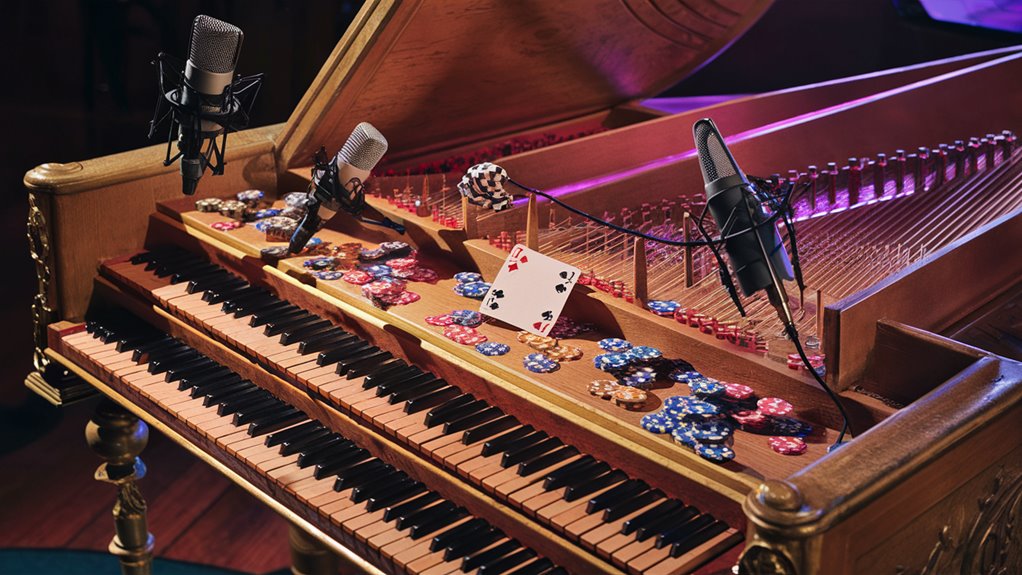
Professional Audio Engineering in Gaming Environments
Advanced Acoustic Design Principles
Sound design in professional gaming environments requires precise acoustic engineering to create optimal playing conditions.
Strategic audio management employs sophisticated systems of ambient cues and controlled acoustics to enhance the gaming experience.
Acoustic optimization focuses on carefully calibrated sound reflection patterns and specific frequency ranges to maintain ideal environmental conditions.
Technical Specifications and Implementation
Professional-grade audio systems utilize precise reverberation control between 1.2-1.8 seconds to ensure perfect speech clarity while maintaining privacy.
The foundation begins with a 35-40 dB white noise floor, enhanced by targeted frequency bands between 100-400 Hz that harmonize with room acoustics. This creates an immersive yet controlled gaming atmosphere.
Advanced Speaker Array Configuration
Ceiling-mounted speaker systems feature strategically positioned drivers that optimize sound distribution throughout the gaming space.
Acoustic engineering principles ensure uniform coverage while maintaining distinct audio zones. These sophisticated systems deliver precisely calibrated sound fields that enhance the gaming environment’s professional atmosphere.
## Frequently Asked Questions
Q: What’s the optimal reverberation time for gaming spaces?
A: Professional gaming environments maintain reverberation times between 1.2-1.8 seconds for optimal acoustics.
Q: How is ambient noise controlled in gaming areas?
A: Base white noise levels are maintained at 35-40 dB with targeted frequency management.
Q: What frequency ranges are most important in gaming acoustics?
A: Key frequency bands between 100-400 Hz are essential for proper acoustic balance.
Q: Why is speaker positioning crucial in gaming spaces?
A: Strategic speaker placement ensures uniform sound distribution and maintains acoustic consistency.
Q: How does sound design affect gaming environment quality?
A: Professional sound design creates an optimal acoustic environment that enhances focus and game experience.
Player Behavior and Musical Timing
The Impact of Musical Timing on Player Behavior in Poker
Understanding the Rhythm of Professional Poker
Scientific research has revealed compelling correlations between musical timing and strategic decision-making in professional poker environments.
Player behavior patterns demonstrate remarkable synchronization with ambient music, particularly when rhythms align with the optimal cognitive processing tempo of 85-95 beats per minute.
Critical Timing Patterns in Professional Play
Three fundamental timing patterns shape poker gameplay dynamics:
- Pre-flop Decision Phase: 2.3-second average deliberation
- Turn Card Analysis: 4.1-second strategic evaluation
- River Bet Implementation: 3.7-second action window
Behavioral Synchronization and Performance Metrics
When background music aligns with these natural behavioral rhythms, players exhibit:
- Enhanced betting consistency
- Improved decision accuracy
- Optimized timing execution
FAQ: Musical Timing and Poker Performance
Q1: How does music tempo affect poker decision-making?
A: Musical rhythms matching the 85-95 BPM range optimize player cognitive processing and decision timing.
Q2: What’s the most critical timing pattern in poker?
A: The pre-flop pause (2.3 seconds) establishes fundamental gameplay rhythm and initial strategic positioning.
Q3: Can musical timing influence betting patterns?
A: Research confirms synchronized background music leads to more consistent and measured betting behaviors.
Q4: What’s the optimal tempo for poker performance?
A: Studies indicate 85-95 beats per minute aligns best with natural decision-making processes.
Q5: How do professional players utilize timing patterns?
A: Professionals often synchronize their actions with natural game rhythms to maintain strategic consistency and optimize performance.
Ethical Boundaries in Sound Strategy

Ethical Sound Strategy in Poker: A Comprehensive Guide
Understanding Sound Strategy Boundaries
Sound implementation in poker strategy requires careful consideration of ethical boundaries and competitive integrity.
This comprehensive analysis examines where legitimate tactics end and manipulation begins, establishing clear guidelines for responsible sound strategy in competitive play.
Three-Tier Classification System
Tier 1: Acceptable Sound Practices
Background acoustics and ambient music that create consistent playing environments represent ethically sound implementations. These elements enhance focus without compromising fairness or competitive integrity.
Tier 2: Gray Area Applications
Rhythmic timing and sound patterns that potentially influence decision-making cycles fall into questionable territory. While not explicitly prohibited, these practices warrant careful ethical scrutiny.
Tier 3: Prohibited Tactics
Manipulative audio techniques including stress-inducing frequencies and subliminal messaging constitute clear ethical violations that undermine poker’s fundamental principles.
Ethical Framework Components
Critical evaluation factors include:
- Transparency in sound implementation
- Universal player awareness
- Competitive fairness
- Strategic integrity
FAQ: Sound Strategy Ethics
Q: What sound elements are universally accepted in poker?
A: Ambient background music and standard environmental sounds that maintain focus without manipulation.
Q: How can players identify unethical sound strategies?
A: Watch for hidden audio cues, unusual frequency patterns, or sound elements that create unfair advantages.
Q: Are noise-canceling headphones ethical in competitive play?
A: Yes, when used for concentration and permitted by tournament rules.
Q: What distinguishes strategic sound use from manipulation?
A: Transparency, equal access for all players, and absence of covert psychological influence.
Q: How should venues implement sound policies?
A: Through clear guidelines, consistent enforcement, and regular monitoring of audio environments.