When a webtoon or web novel disappears from a reading app, it does not automatically mean that its exclusivity period has ended or that it has moved to another service. A title may leave because a distribution agreement expired, the platform changed its catalog, regional rights ended, a translation was discontinued, or the rights holder requested removal.
Contract expiration can affect availability. Manta has publicly explained that some titles were initially scheduled to leave because their contracts had expired, although the company later renegotiated to retain certain works under a different payment model. This shows that an expired agreement may lead to removal, renegotiation, or a new commercial arrangement not necessarily an immediate release on another platform.
Finding the series again requires more than searching its English title. Localized names, cover images, publisher credits, payment systems, and regional availability may differ between services. The process below helps readers identify the same work and confirm that a new listing is authorized.
4-Step Quick Verification Framework to Check If a Series Has Moved to a New Platform
If a title has been removed or its service is scheduled to end, begin with the information on the old listing before it disappears.
Step 1: Gather Complete Original Metadata
Record as many identifying details as possible:
Current English or localized title on the old platform.
Original Title: Save the title in its original writing system, such as Korean Hangul, Japanese kanji and kana, or Chinese characters. Hanja should not be used as a general term for Chinese-language titles because it specifically refers to Chinese characters used in Korean.
Author and Artist Names: Record the writer, artist, original novelist, adaptation studio, and publisher when listed. Creator names may be presented differently across services, so save both the original spelling and romanized form.
Publisher or Rights Holder: Copyright credits can be more reliable than a translated title. An official Tappytoon series page, for example, identifies the creators, copyright owner, and the fact that the work is published under license from its partners.
Also save the old URL, cover image, synopsis, character names, and completion status. These details help distinguish the series from other works with similar titles.
Step 2: Check Global Database Aggregators
Community databases can help locate alternate titles, creator names, original publishers, and possible English licensors.
For Web Novels: Novel Updates maintains lists of English publishers and individual pages for translated Asian novels. It can provide useful leads when a work has several English titles.
For Webtoons: MangaUpdates and Anime-Planet may contain alternate names, creators, publication status, and related editions. Anime-Planet describes itself as an anime and manga database and has also entered official licensing partnerships, but individual database entries should still be checked against the rights holder or reading platform.
These sites are discovery tools rather than final proof. Entries may be community-maintained, incomplete, delayed, or based on announcements that later changed. Use the information to improve your search, then confirm the result through an official source.
Step 3: Search Directly on Popular Secondary Platforms
Search the official catalogs of services that publish licensed webtoons or web novels in your language and region. Possible services include WEBTOON, Tapas, Tappytoon, Manta, Lezhin Comics, Pocket Comics, Toomics, and publisher-operated novel platforms.
Run several searches instead of entering only one English title:
Original-language title.
Localized title in quotation marks.
Author or artist name.
Publisher or studio name combined with a distinctive word from the title.
A unique character name combined with the creator’s name.
You can also use a search engine with a site filter, such as:
site:tappytoon.com "creator name"
site:tapas.io "original title"
site:manta.net "character name"
Search both the website and the official mobile app. Catalogs may differ by country, language, app version, or age setting. A result that appears in search engines may also refer to a delisted page rather than a currently readable series.
Step 4: Verify Platform Legitimacy and Licensing
A matching title and cover do not prove that a listing is authorized. Confirm the following before purchasing chapters or creating an account:
The website uses the platform’s official domain, or the app is linked from that domain.
The series page identifies the creator, copyright owner, publisher, or licensing partner.
The rights holder, creator, studio, or recognized publisher has announced or linked to the release.
The platform’s terms state that its commercial catalog is owned by the service or licensed from copyright holders. Manta, for example, states that content on its service is either owned by Manta or licensed to it by the copyright owner.
Do not rely only on an “Official” badge. Unauthorized sites can copy badges, credits, cover images, and descriptions. Translation quality, image resolution, and transparent pricing are also not proof of licensing.
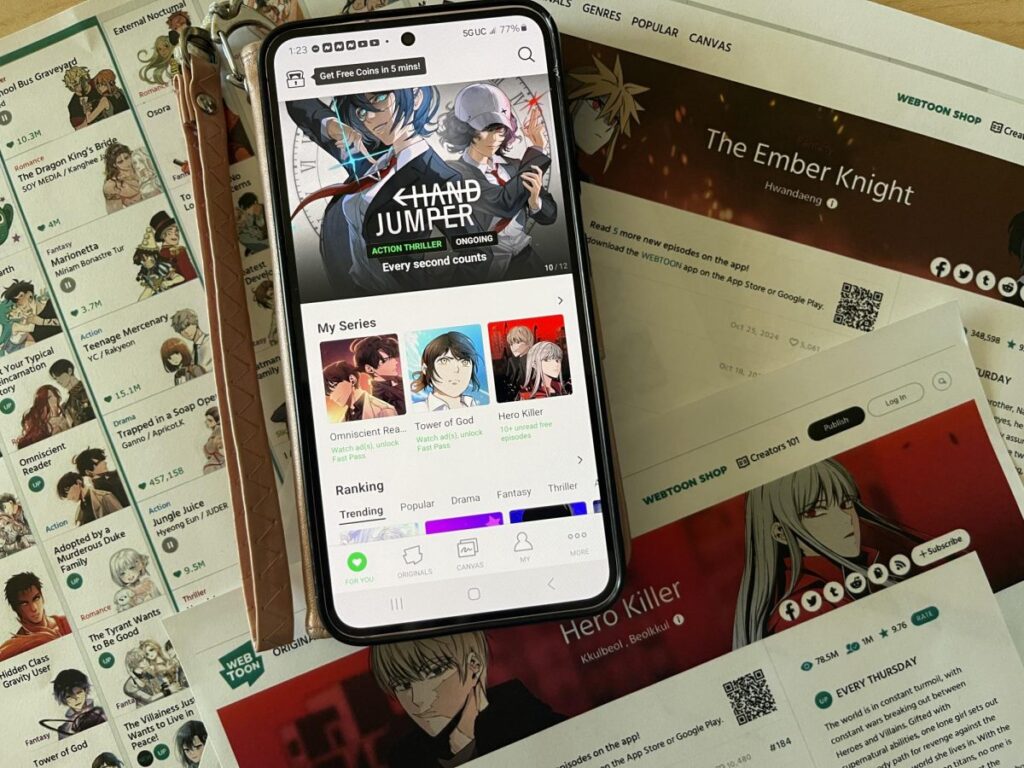
Understanding “Exclusivity Periods” and When Content Moves to New Services
An exclusivity agreement gives one service defined distribution rights under specific contractual conditions. Those conditions may cover a particular country, language, format, edition, payment model, or period.
Exclusivity Phase: During an exclusive term, another platform may be prevented from distributing the same licensed edition within the covered market. However, the underlying work may still be available elsewhere in another language, country, format, or adaptation if those rights are controlled separately.
There is no reliable industry-wide rule that webtoon or web novel exclusivity normally lasts one to three years. Contract lengths are usually private and can vary by title, publisher, territory, platform, and type of right.
Syndication Phase (Non-Exclusive Distribution): After an exclusive arrangement ends, the rights holder may grant licenses to additional services. The work may also remain on the original platform under new terms, move to a different payment system, become unavailable temporarily, or never receive another localized release.
Distribution rights do not necessarily “revert to the author.” Depending on the contract, they may be controlled by the author, a studio, an original publisher, an adaptation producer, an agency, or several parties with different territorial and language rights. Tapas’ standard terms for self-published creator content, for example, describe a non-exclusive license, while additional programs and commercial titles can be governed by separate agreements.
Signs That a Series Has Ended Its Exclusivity Contract on the Old Platform
The strongest sign is an official notice that specifically mentions license expiration, contract expiration, distribution rights, or the final date of availability.
Status Changes: A “Service Ended,” “Leaving Soon,” or delisting notice may indicate that the platform will stop offering the title. However, “Completed” usually means that the story or season has finished publishing. It does not show that exclusivity has ended.
A title can be completed and remain licensed on the same platform for years. It can also be ongoing when its regional license ends.
Discontinuation of Free Reading Features: The removal of wait-to-unlock promotions, discounts, or subscription access may reflect a payment-model change rather than the end of all distribution rights. Manta retained some contract-affected titles by moving them from its subscription catalog to a per-episode Gem model.
Creator/Studio Social Media Announcements: Official creator, publisher, and studio accounts may announce a new release and provide a direct platform link. Confirm that the account is authentic and that the announcement refers to the same language and region you use.
Also examine the old platform’s help center and transaction history. Tapas states that episodes previously unlocked can remain tied to an account even when a series is no longer available for new purchases. Therefore, disappearance from the public catalog does not always mean that previous customers immediately lose all access.
How to Find a Series When the New Platform Changes the Title or Cover Art
Localized titles are not consistent across publishers. One service may translate the original title literally, while another uses a shorter marketing title. Covers may also differ because the platform uses alternate promotional artwork, a new edition, or a different image crop.
Use several identifiers together rather than relying on one clue.
| Challenge | Effective Search Strategy | Tools / Practical Tips |
|---|---|---|
| English title is completely changed | Search by creator, studio, and original publisher | Try original and romanized spellings of every credited creator |
| Original title is unknown | Locate an older official page or database record | Copy the original-language title and verify it against a publisher page |
| Thumbnail or cover art is different | Search with an official old cover or promotional image | Reverse-image results can include unauthorized sites, so verify the final result separately |
| Character names are retranslated | Search distinctive plot terms with creator information | Use a rare location, organization, or character description rather than broad genre tags |
| Several works have similar titles | Compare copyright credits and synopsis details | Confirm the writer, artist, studio, and original publication year |
Reverse-image search can help identify press releases and official series pages, but it should not be used as proof by itself. Avoid uploading complete paid chapters or distributing copyrighted panels. A public cover, banner, or small promotional image is usually sufficient for identification.
Popular Reading Platforms That Frequently Acquire Post-Exclusive Content
It is not possible to confirm that a platform “frequently acquires post-exclusive content” unless the platform or rights holder publishes details about previous contracts. Readers should instead treat the following as major licensed catalogs worth searching:
Tapas & Tappytoon: Both distribute webcomics and novels, including licensed Korean works. Tappytoon identifies itself as an official service and displays creator and copyright information on its series pages.
Manta Comics: Manta offers comics and novels through subscription and per-episode payment options. Its own explanation shows that contract expiration can cause a title to leave, remain under renegotiated terms, or move between payment models.
Lezhin Comics & Toomics: These services maintain licensed digital catalogs across several genres and age categories. Their inclusion in a search does not mean that every removed title will appear there.
Pocket Comics, WEBTOON, and Other Publisher Services: Catalog availability depends on language, country, licensing partner, and release schedule. Search the official service as well as the original publisher’s announcements.
Do not assume that a title from KakaoPage, NAVER Series, RIDI, or another Korean platform will move to a particular English-language service. The original Korean platform, global distributor, and localized publisher may be separate companies with different rights.
The end of one distribution agreement does not guarantee that a webtoon or web novel will appear elsewhere. A new edition may be announced immediately, released months later, restricted to another territory, or never licensed again in the reader’s language.
Actionable Takeaways for Readers:
- Save the original-language title, creator names, publisher credit, old URL, and cover before a series is removed.
- Use Novel Updates, MangaUpdates, or Anime-Planet to discover alternate names, but verify every licensing claim on an official platform or publisher page.
- Treat “Completed,” a changed payment model, and a missing search result as separate signals rather than proof that exclusivity has ended.
- Confirm the new listing through copyright credits, licensing language, and an announcement or link from the rights holder.
- Purchase or read through authorized services so that access, payment records, and creator compensation are handled through the licensed distribution chain.